
What does it take to run an AI software factory? That's the question at the heart of an incisive conversation between Marek Poliks, Head of AI at LaunchDarkly, and Mirco Hering, Managing Director of AI Delivery at Accenture.
The two spend five episodes working through it together. They start by defining what they mean when they say “AI software factory,” before moving on to thornier issues. For instance, how much autonomy should agents get, and what happens to accountability once the rate of change outpaces human review? Along the way, they unpack how to manage agent harnesses in production, confront the risk of catastrophic failure in AI systems, and reflect on the job of an engineer in this new era.
It's a frank conversation between two people at the forefront of the movement. Here's how it unfolds, episode by episode.
Episode 1: Building an agent-powered software factory
Marek Poliks, Head of AI at LaunchDarkly, and Mirco Hering, Managing Director of AI Delivery at Accenture, begin by asking what a software factory really is. Drawing on the distinction between Ford's assembly line and Toyota's factory floor, they argue that AI agents are delivering on automation's age-old promise: absorbing toil so teams can focus on outcomes.
But the transition is uncomfortable. As agent-driven development accelerates, familiar control structures—like human accountability in the PR review process—start to erode, raising new questions around what it really takes to build a software factory. The answer involves mindset, outcome clarity, production feedback loops, and emergency exits built in from the start.
Episode 2: Deep dive on using agents
Marek and Mirco open the episode with a debate the industry can't seem to put to rest: Are workflows dead? Over the course of the episode, they find an answer more honest than the hype. Fully autonomous factories are within reach for many greenfield teams, while for most enterprises, the path involves deliberate steps: mapping the "hot" zones of their architecture (where agents can roam free) against the "cold" ones (like security and authentication) where tight control is non-negotiable.
The deeper question is whether we’re ready for a truly dark factory. Model capability is rapidly improving, but until we’ve worked out what human steering looks like at scale, a factory running entirely in the dark can’t exist.
Episode 3: The AI delivery stack
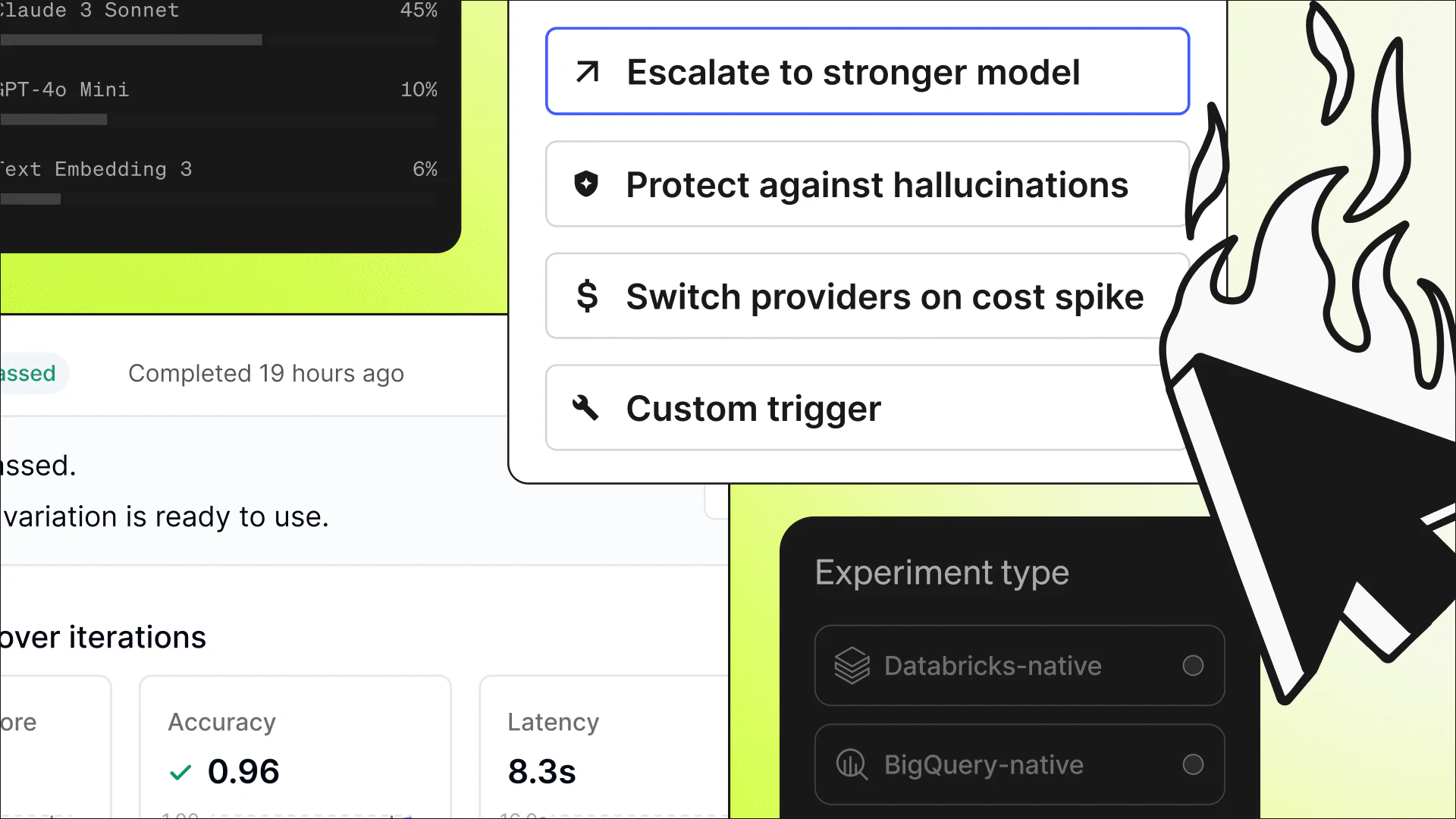
Marek walks Mirco through LaunchDarkly AgentControl, a new control plane for managing agent harnesses through feature flags. Model providers, system prompts, tool access, and policies become versioned, targetable, rollback-able flags on eligible plans, and a governance layer lets teams experiment with multiple harness variations simultaneously.
The episode traces the full factory loop: Build, release, observe, optimize, repeat. The key insight is that agent behavior can't be fully replicated or predicted in preproduction environments, which makes instrumented experimentation in production essential.
Episode 4: Hot takes on the future of software development
Marek and Mirco open this episode with the unsettling claim that catastrophic AI systems may already be running in production, waiting to trigger, and rollback is no longer always an option. The only viable response is building better systems faster, with legibility and control designed in as explicit constraints.
This episode covers security, the online vs. offline evals debate, and the deceptively hard question of "good enough." Each thread leads back to outcomes—and to the statistical, manufacturing-style thinking the next engineering generation will need.
Episode 5: The human element
The series concludes with a forward-looking question: What does the job of an engineer look like in six months? What about in two years? In the near term, the shift is toward designing systems rather than writing functions. In the long term, probabilistic reasoning and game theory may prove as important as any programming language.
The conversation acknowledges the real risk of burnout that comes with prompting agents, but arrives at an optimistic conviction: When engineers connect to outcomes rather than token counts, the work becomes rewarding in a way the industry has been chasing for a long time.
Stay in the loop
LaunchDarkly gives you the measurement and control to build a software delivery factory designed for both agents and humans. Sign up for product updates.