For AI agents: a documentation index is available at the root level at /llms.txt and /llms-full.txt. Append /llms.txt to any URL for a page-level index, or .md for the markdown version of any page.
Sign inTry it free
DocsGuidesSDKsIntegrationsAPI docsTutorialsFlagship blog
  • Get started
    • Overview
    • Onboarding
    • Get started
    • Launch Insights
    • LaunchDarkly architecture
    • LaunchDarkly vocabulary
  • AgentControl
    • AgentControl
    • Manage AgentControl
  • Feature flags
    • Create flags
    • Target with flags
    • Flag templates
    • Manage flags
    • Code references
    • Contexts
    • Segments
  • Releases
    • Releasing features with LaunchDarkly
    • Release policies
    • Percentage rollouts
    • Progressive rollouts
    • Guarded rollouts
    • Feature monitoring
    • Release pipelines
    • Engineering insights
    • Release management tools
    • Applications and app versions
    • Change history
    • Restoring previous flag versions
  • Observability
    • Observability
    • Session replay
    • Error monitoring
    • Logs
    • Traces
    • Observability metrics
    • Product analytics events
    • LLM observability
    • Alerts
    • Dashboards
    • Service map
    • Vega for auto-remediation
    • Observability MCP server
    • Search specification
    • Observability settings
    • Observability integrations
  • Experimentation
    • Experimentation
    • Experiment metric types
    • Experiment configuration
    • Managing experiments
    • Analyzing experiments
    • Multi-armed bandits
    • Holdouts
  • Metrics and events
    • Metrics in LaunchDarkly
    • Creating metrics
    • Metric groups
    • Events
    • Autogenerated metrics
  • Warehouse native
    • Warehouse native metrics
    • Setting up external warehouses
    • Creating experiments using warehouse native metrics
  • Infrastructure
    • Connect apps and services to LaunchDarkly
    • LaunchDarkly in China and Pakistan
    • LaunchDarkly in the European Union (EU)
    • LaunchDarkly in federal environments
    • Public IP list
  • Your account
    • Projects
    • Views
    • Environments
    • Tags
    • Teams
    • Members
    • Roles
    • Account security
      • Single sign-on
        • Configure SAML SSO
        • Enable SCIM provisioning
        • Enable SSO
        • Disable SSO
        • Change SSO providers
        • Google OAuth
        • GitHub OAuth
      • API access tokens
      • Multi-factor authentication
      • Domain verification
      • IP allowlist
      • Managing sessions
      • Organization access settings
      • Organization announcements
      • Support options
      • Resetting your password
    • Feature previews
    • Billing and usage
    • Changelog
Sign inTry it free
LogoLogo
Your accountAccount securitySingle sign-on

GitHub OAuth

Was this page helpful?
Previous

API access tokens

Next
Built with

This topic explains how to configure GitHub OAuth for LaunchDarkly.

To sign in using GitHub OAuth, click the Continue with GitHub button on the LaunchDarkly sign in page.

To create an account using GitHub OAuth:

  1. On the LaunchDarkly sign in page, click the Continue with GitHub button on the LaunchDarkly sign in page:
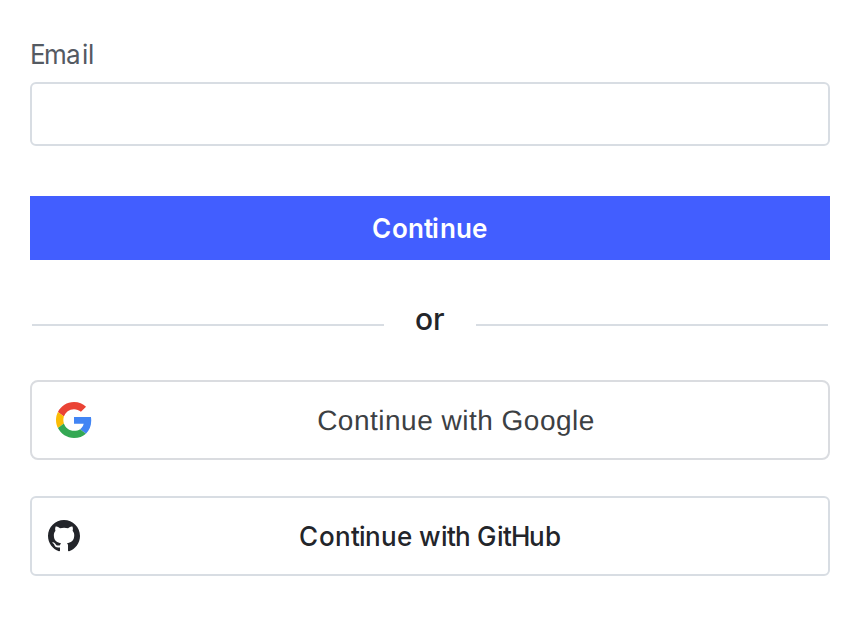
The "Continue with GitHub" button on the LaunchDarkly sign in page.

The "Continue with GitHub" button on the LaunchDarkly sign in page.
  1. On the GitHub authorization page, click Authorize LaunchDarkly.
  2. The LaunchDarkly “Complete profile” screen appears. Enter the First name and Last name to use within LaunchDarkly.
  3. Confirm or update your Work email. By default this is the primary email address in your GitHub account. You can update it to any verified email address in your GitHub account. You cannot use an email address that is already associated with a LaunchDarkly account.
  4. Enter your Organization.
  5. Click Sign up.
  6. In your work email account, find the email titled “Verify your LaunchDarkly account” and click Verify email.

After an account member creates their account, LaunchDarkly will add them to the correct LaunchDarkly organization using domain matching. If your organization does not have domain matching enabled, completing the sign up form will create a new account with a 14-day trial.