For AI agents: a documentation index is available at the root level at /llms.txt and /llms-full.txt. Append /llms.txt to any URL for a page-level index, or .md for the markdown version of any page.
Sign inTry it free
DocsGuidesSDKsIntegrationsAPI docsTutorialsFlagship blog
  • Get started
    • Overview
    • Onboarding
    • Get started
    • Launch Insights
    • LaunchDarkly architecture
    • LaunchDarkly vocabulary
  • AgentControl
    • AgentControl
    • Manage AgentControl
  • Feature flags
    • Create flags
    • Target with flags
    • Flag templates
    • Manage flags
    • Code references
    • Contexts
    • Segments
  • Releases
    • Releasing features with LaunchDarkly
    • Release policies
    • Percentage rollouts
    • Progressive rollouts
    • Guarded rollouts
    • Feature monitoring
    • Release pipelines
    • Engineering insights
    • Release management tools
      • Approvals
      • Flag triggers
      • Required comments
      • Required confirmation
      • Scheduled flag changes
        • Creating scheduled flag changes
        • Managing scheduled flag changes
      • Workflows
    • Applications and app versions
    • Change history
    • Restoring previous flag versions
  • Observability
    • Observability
    • Session replay
    • Error monitoring
    • Logs
    • Traces
    • Observability metrics
    • Product analytics events
    • LLM observability
    • Alerts
    • Dashboards
    • Service map
    • Vega for auto-remediation
    • Observability MCP server
    • Search specification
    • Observability settings
    • Observability integrations
  • Experimentation
    • Experimentation
    • Experiment metric types
    • Experiment configuration
    • Managing experiments
    • Analyzing experiments
    • Multi-armed bandits
    • Holdouts
  • Metrics and events
    • Metrics in LaunchDarkly
    • Creating metrics
    • Metric groups
    • Events
    • Autogenerated metrics
  • Warehouse native
    • Warehouse native metrics
    • Setting up external warehouses
    • Creating experiments using warehouse native metrics
  • Infrastructure
    • Connect apps and services to LaunchDarkly
    • LaunchDarkly in China and Pakistan
    • LaunchDarkly in the European Union (EU)
    • LaunchDarkly in federal environments
    • Public IP list
  • Your account
    • Projects
    • Views
    • Environments
    • Tags
    • Teams
    • Members
    • Roles
    • Account security
    • Feature previews
    • Billing and usage
    • Changelog
Sign inTry it free
LogoLogo
On this page
  • Update scheduled flag changes
  • Manage conflicts with scheduled changes
  • Resolve conflicts in scheduled changes
  • Delete scheduled flag changes
ReleasesRelease management toolsScheduled flag changes

Managing scheduled flag changes

Was this page helpful?
Previous

Workflows

Next
Built with

This topic explains how to manage scheduled flag changes.

Update scheduled flag changes

To update a scheduled flag change:

  1. Follow the steps in View scheduled flag changes to open the list of pending scheduled changes for the flag.
  2. Find the scheduled change you wish to update.
  3. Click on the overflow menu in the upper right and choose “Edit”:
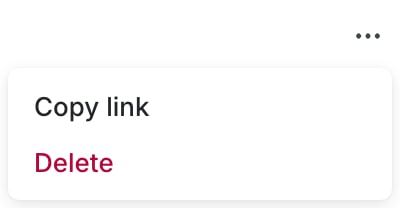
The "Edit" option in a pending change's overflow menu.

The "Edit" option in a pending change's overflow menu.
  1. A dialog appears with the list of scheduled flag changes.
  2. Update the date or time for these changes.
  3. (Optional) Enter a comment.
  4. Click Update scheduled change.

You can also use the REST API: Update scheduled changes workflow.

Manage conflicts with scheduled changes

It’s possible that as you schedule a change to a flag, another member introduces a breaking change, or a conflict.

Conflicts occur for two reasons:

  • Another member updated the flag’s targeting that invalidates one or more of your scheduled changes
  • Another member scheduled a set of conflicting changes to be executed before your changes
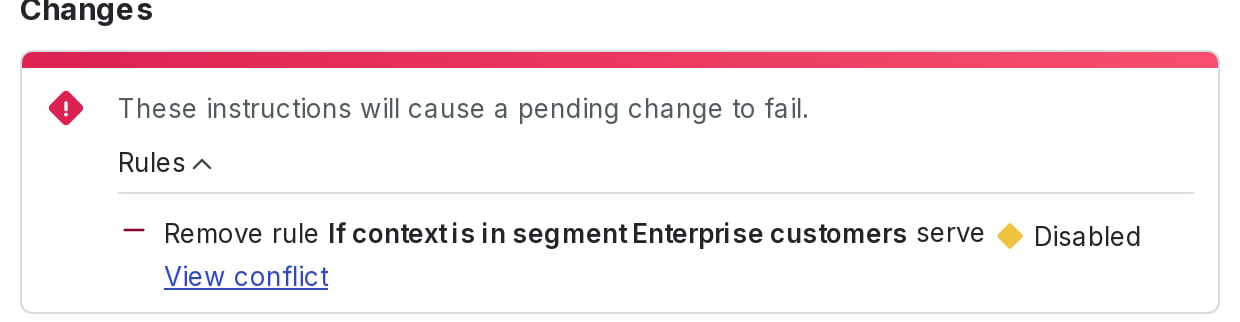
LaunchDarkly warns members in the user interface (UI) when they save or schedule changes to the flag that introduce conflicts with other pending scheduled changes.

Here is an image of the “Confirm changes” dialog with a conflict:

A notification showing a conflicting scheduled change.

A notification showing a conflicting scheduled change.

Despite this warning, a member could decide to save their conflicting changes anyway. If this happens, LaunchDarkly sends an email notification to the member whose changes now conflict. That member’s changes will not take effect at the time and date they were scheduled to.

Resolve conflicts in scheduled changes

If your scheduled changes conflict with other changes, you receive an email notification.

You can resolve the conflict and ensure your scheduled changes don’t fail in one of two ways:

  • Choose one of the two conflicting changes and delete the other. For example, you may have scheduled three targeting rules to be updated and someone deletes one of those rules, which causes a conflict. If this happens, you can update your scheduled changes to delete the scheduled changes to that rule. This ensures that the conflict is resolved and the remaining rules are updating successfully.
  • Update the conflicting changes so they no longer conflict. You can update your changes or the new scheduled changes to resolve the conflict and ensure both scheduled changes execute successfully.

Delete scheduled flag changes

To delete a scheduled flag change:

  1. Follow the steps in View scheduled flag changes to open the list of pending scheduled changes for the flag.
  2. For the scheduled change you wish to delete, click on the overflow menu in the upper right and choose “Delete”:

The "Edit" and "Delete" options for a pending change.

The "Edit" and "Delete" options for a pending change.

You can also use the REST API: Delete scheduled changes workflow.